
This post contains affiliate links.
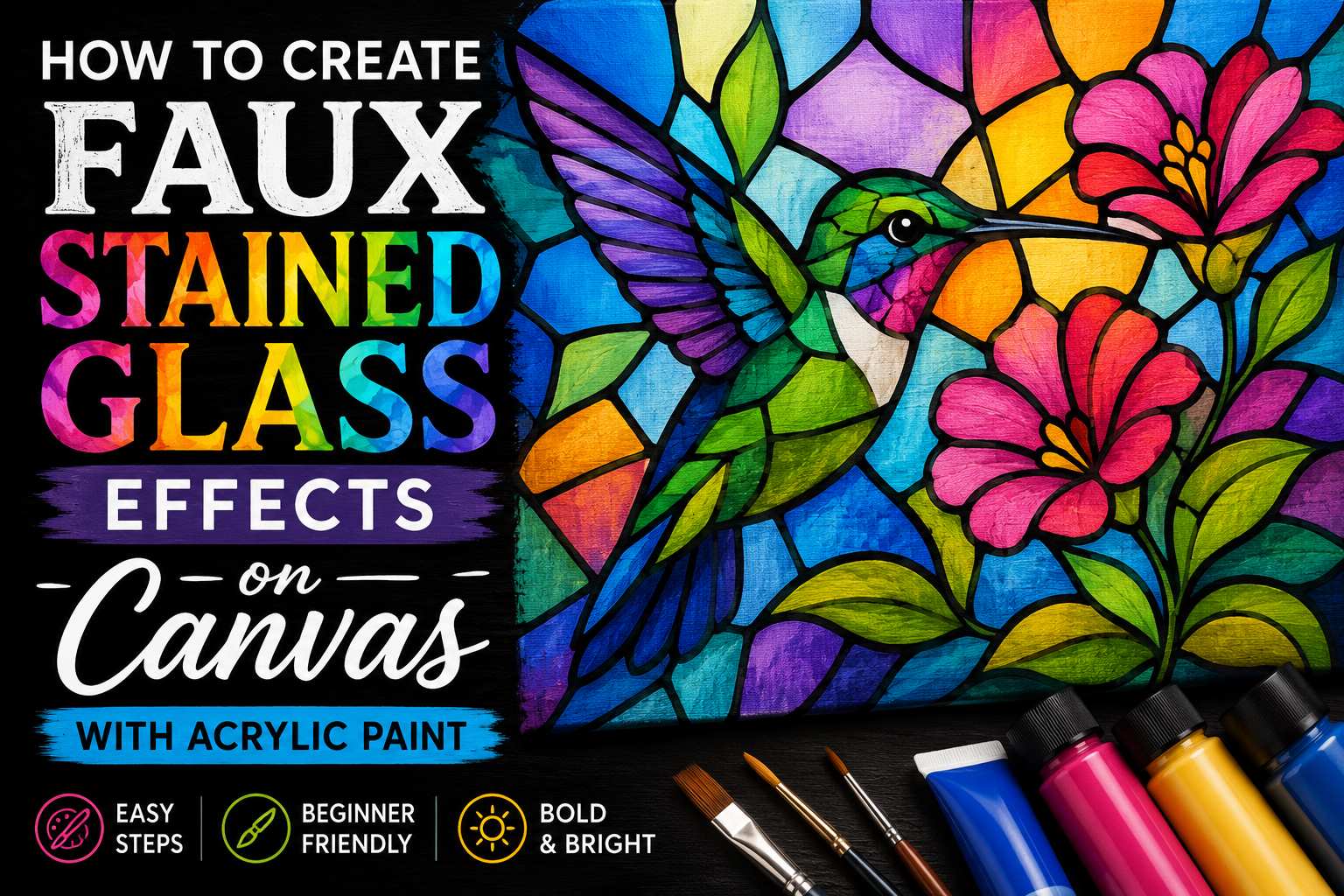
If you love the glowing beauty of stained glass but don’t want to cut glass or use expensive tools, faux stained glass painting with acrylics is a fantastic alternative. This beginner-friendly painting style uses bold black outlines, bright acrylic colors, and simple shapes to create artwork that looks like real stained glass.
The best part? You don’t need advanced drawing skills to get beautiful results.
In this guide, you’ll learn how to create faux stained glass effects on canvas step-by-step using simple acrylic painting techniques anyone can follow.
What Is Faux Stained Glass Painting?
Faux stained glass painting is a painting technique that mimics the appearance of traditional stained glass windows using acrylic paint on canvas, wood, or paper.
Instead of real glass pieces joined with lead, you paint:
- Bold black outlines
- Bright color sections
- Glowing highlights
- Separated “glass panels”
The finished painting creates the illusion of stained glass while staying simple and beginner-friendly.
Why This Painting Style Is So Popular
Artists love faux stained glass painting because it:
- Looks vibrant and eye-catching
- Works great on black or white canvas
- Is easy for beginners
- Creates bold contrast
- Makes colors appear brighter
- Can simplify complicated subjects
This technique works especially well for:
- Birds
- Hummingbirds
- Koi fish
- Flowers
- Trees
- Sunsets
- Ocean waves
Supplies You’ll Need
Canvas
You can use either:
- White canvas
- Black canvas (great for glowing effects)
Acrylic Paint
Bright colors work best:
- Titanium White
- Mars Black
- Primary Yellow
- Cadmium Orange
- Quinacridone Magenta
- Phthalo Blue
- Hooker’s Green
Brushes
A few simple brushes are enough:
- Flat brush
- Round brush
- Small liner brush
Other Helpful Supplies
- White chalk pencil
- Paint marker
- Palette
- Water cup
- Paper towels
Step 1: Simplify Your Design
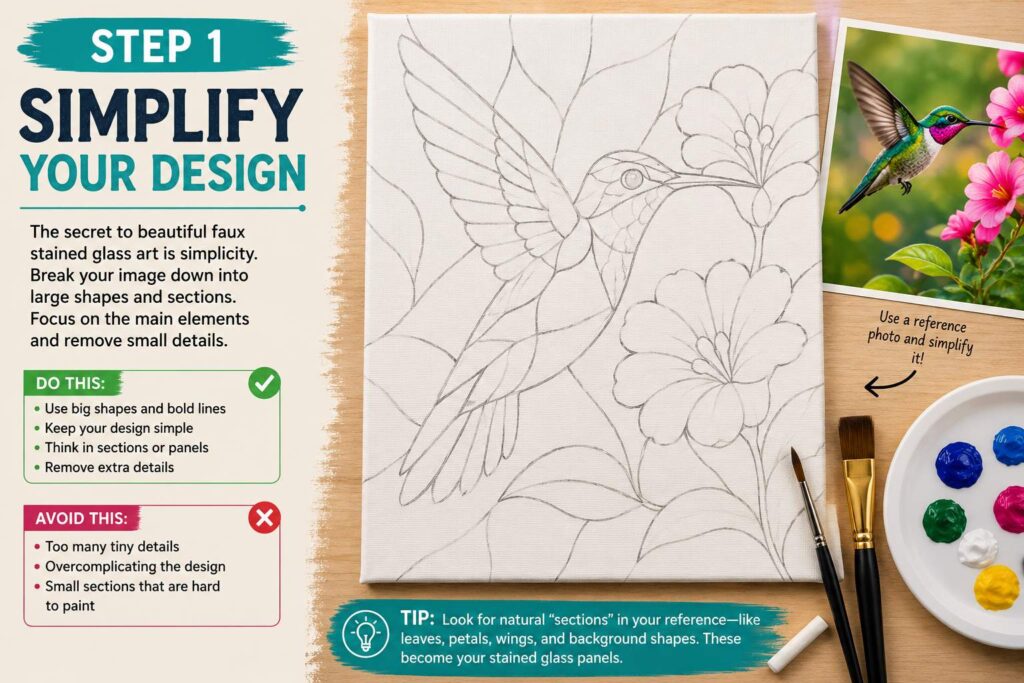
One of the biggest secrets to faux stained glass painting is simplicity.
Do not paint every tiny detail.
Instead:
- Break the image into larger shapes
- Think in sections
- Create “glass panels”
Good beginner subjects include:
- Simple birds
- Flowers
- Butterflies
- Trees
- Koi fish
If using a photo:
- Trace only the major lines
- Remove unnecessary details
- Focus on bold shapes
Step 2: Draw Black Outline Sections
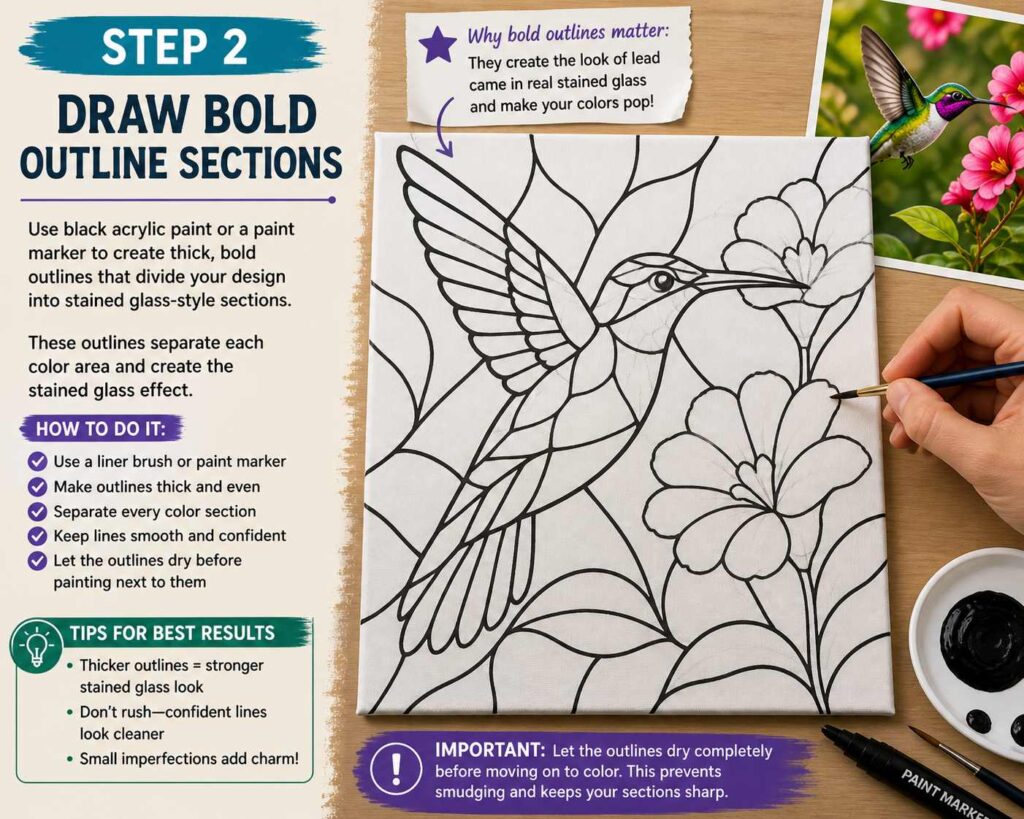
Now divide your design into stained glass-style sections.
Use:
- Black acrylic paint
- Paint marker
- Or a liner brush
The black outlines should:
- Be thick and bold
- Separate each color area
- Create clean divisions
This is what creates the stained glass illusion.
A common beginner mistake is making outlines too thin.
Thicker outlines almost always look better.
Step 3: Paint Each Section With Bright Color
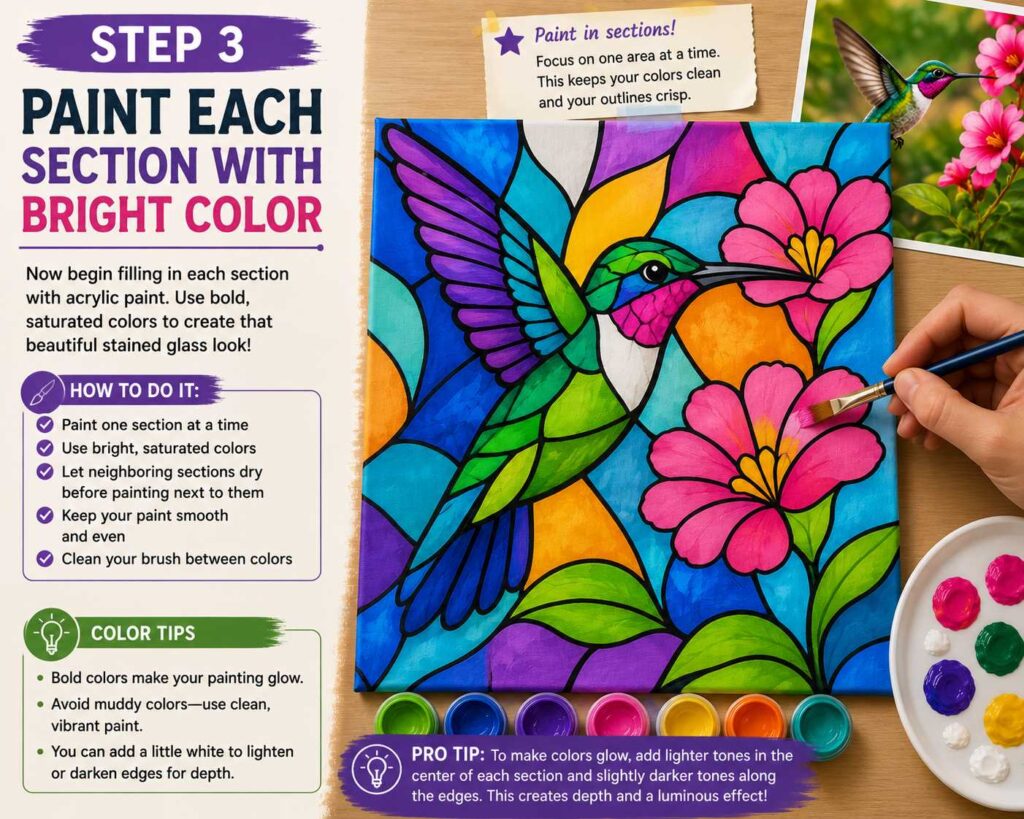
Now begin filling in each panel with acrylic paint.
Tips for stronger color:
- Use bold, saturated paint
- Avoid muddy mixing
- Paint one section at a time
- Let neighboring sections dry before painting beside them
To create glowing effects:
- Blend darker edges
- Add lighter centers
- Use circular brush strokes while paint is wet
This creates the illusion of light shining through glass.
Step 4: Add Highlights and Glow Effects
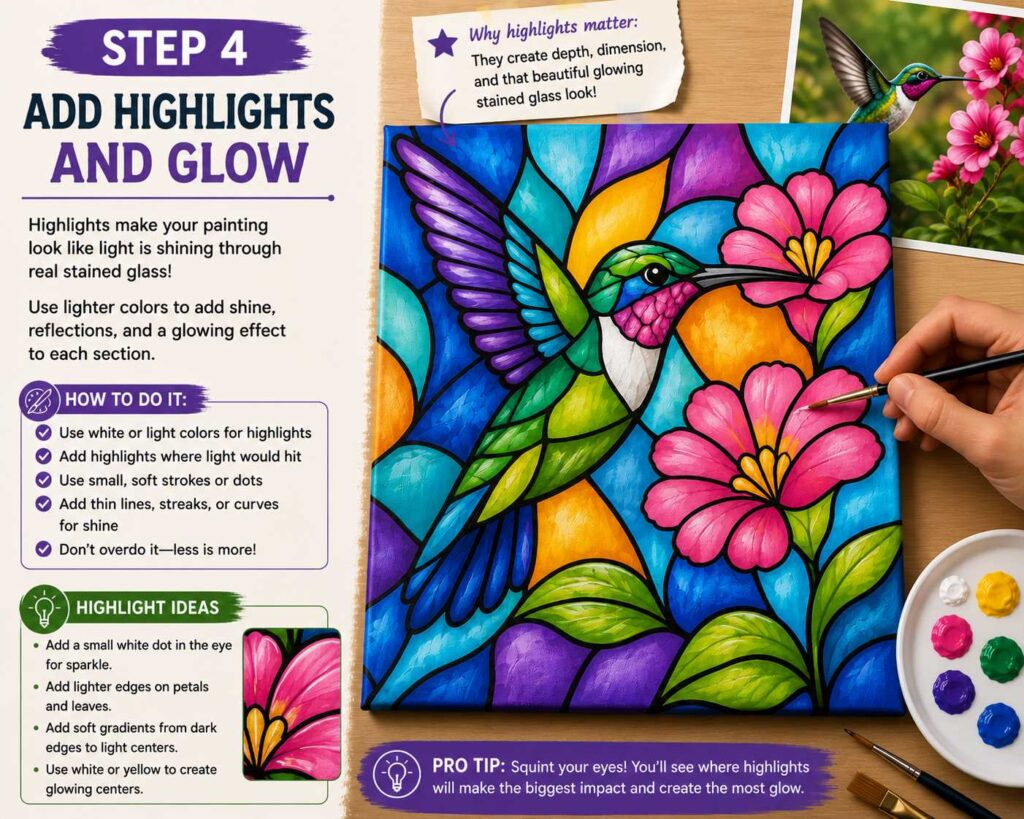
This is where your painting really comes alive.
Use small amounts of:
- White paint
- Bright yellow
- Light blue
- Soft pink
Add subtle highlights inside sections to imitate reflected light.
You can also:
- Add tiny white streaks
- Create glowing edges
- Blend soft gradients
The goal is to make the painting appear luminous.
Step 5: Finish the Background
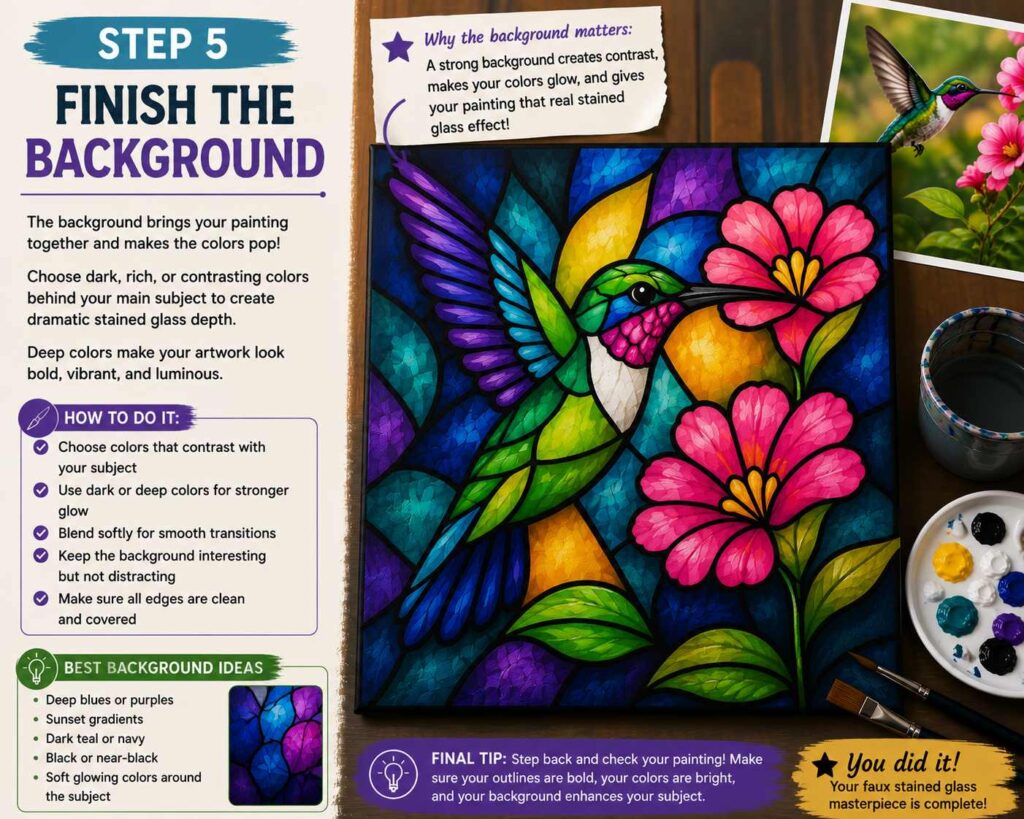
The background is extremely important in faux stained glass painting.
Good background ideas:
- Dark black backgrounds
- Deep blue gradients
- Soft glowing skies
- Contrasting bright colors
A darker background often makes the colors appear brighter and more dramatic.
Common Mistakes to Avoid
Making Sections Too Small
Large simple shapes work better than tiny complicated details.
Using Weak Outlines
Thin outlines reduce the stained glass effect.
Overblending Colors
Too much blending can make colors muddy.
Adding Too Much Detail
Simple designs usually look stronger and more professional.
Best Subjects for Faux Stained Glass Painting
Some subjects naturally work well with this style:
Birds
Hummingbirds and cardinals are especially popular.
Flowers
Bright petals create beautiful stained glass effects.
Koi Fish
Their flowing shapes work perfectly for bold panel designs.
Trees
Trees simplify easily into stained glass sections.
Ocean Waves
Wave movement creates exciting abstract patterns.
Is Faux Stained Glass Painting Good for Beginners?
Absolutely.
This is one of the best acrylic painting styles for beginners because:
- It simplifies shapes
- Encourages bold design
- Does not require realism
- Looks impressive quickly
Even simple paintings can look vibrant and professional using this method.
Final Thoughts
Faux stained glass acrylic painting is a fun and rewarding art style that combines bold outlines, glowing colors, and simple design into eye-catching artwork anyone can create.
Whether you’re painting hummingbirds, koi fish, flowers, or sunsets, this technique allows you to create artwork that feels colorful, dramatic, and full of light.
Start simple, keep your shapes bold, and focus on strong contrast.
That’s the secret to making acrylic paintings look like stained glass.
Frequently Asked Questions
Can you make acrylic paint look like stained glass?
Yes. Bold black outlines, bright colors, and glowing highlights can create a stained glass appearance using acrylic paint.
Do I need drawing skills?
No. Simple shapes work best for faux stained glass painting.
Is black canvas better?
Black canvas creates stronger glowing effects, but white canvas works great too.
What is the best paint for faux stained glass art?
Bright acrylic paints with strong pigmentation work best.
What subjects work best?
Birds, flowers, koi fish, trees, sunsets, and waves are all excellent choices.
Related Articles
- Stained Glass Acrylic Painting Techniques
- Small Canvas Painting Ideas
- How to Paint a Stained Glass Tree (Step-by-Step for Beginners)
This post contains affiliate links.
I’m hoping this is a hard copy book, if so I’m ordering.