
This post contains affiliate links.
Hummingbirds are one of the most beautiful subjects to paint. Their glowing feathers, delicate wings, and bright flowers create artwork that instantly catches attention. The problem is many beginners think hummingbirds are too difficult to paint.
The truth is, they become much easier when you break the process into simple stages.
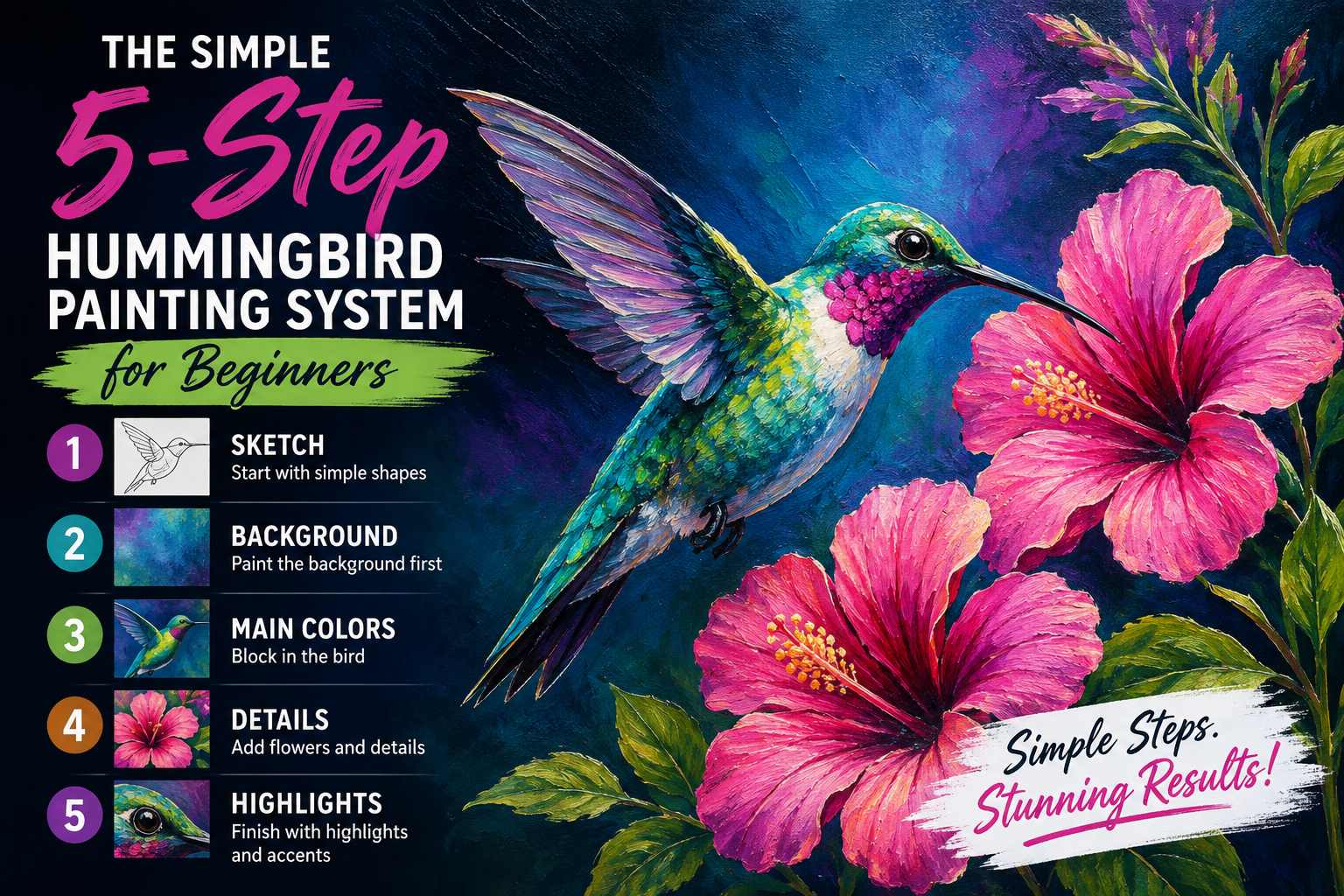
In this beginner-friendly guide, you’ll learn a simple 5-step hummingbird painting system that helps new artists create colorful hummingbird artwork without feeling overwhelmed.
Whether you paint with acrylics on canvas, follow step-by-step tutorials, or simply want a relaxing creative hobby, this system makes painting hummingbirds fun and approachable.
Why Hummingbirds Are Perfect for Beginner Artists
Hummingbirds work incredibly well for beginner acrylic painting because they naturally allow:
- Bright colors
- Loose brushwork
- Simple shapes
- Creative backgrounds
- Stylized designs
You do not need perfect realism to create a beautiful hummingbird painting. In fact, bold colors and simplified shapes often look better in decorative art.
Many beginners struggle because they try to paint every tiny feather. Instead, focus on:
- Shape
- Color
- Contrast
- Flow
That is exactly what this 5-step system teaches.
Step 1: Start With a Simple Sketch
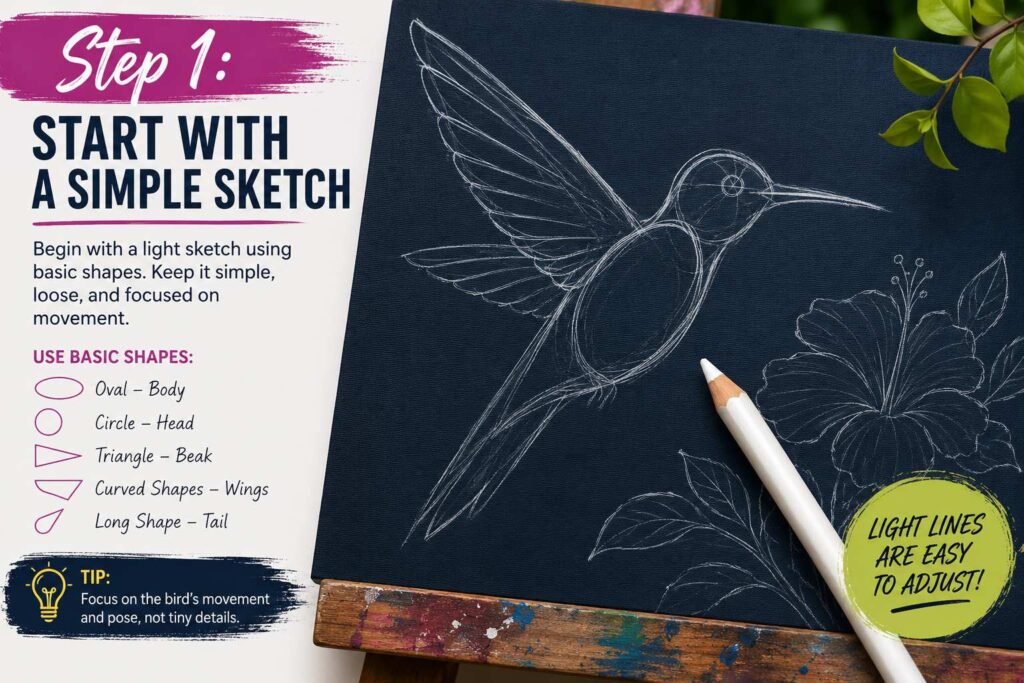
The first step is creating a light hummingbird sketch.
Do not overcomplicate this part. Think of the bird as basic shapes:
- Oval body
- Circle head
- Long triangle beak
- Curved wing shapes
Keep your sketch loose and light.
A white chalk pencil works especially well on dark or painted canvases because it stays visible without becoming permanent.
Beginner Tip
Focus more on the hummingbird’s movement than tiny details. A flowing pose instantly makes the painting feel alive.
Step 2: Paint the Background First
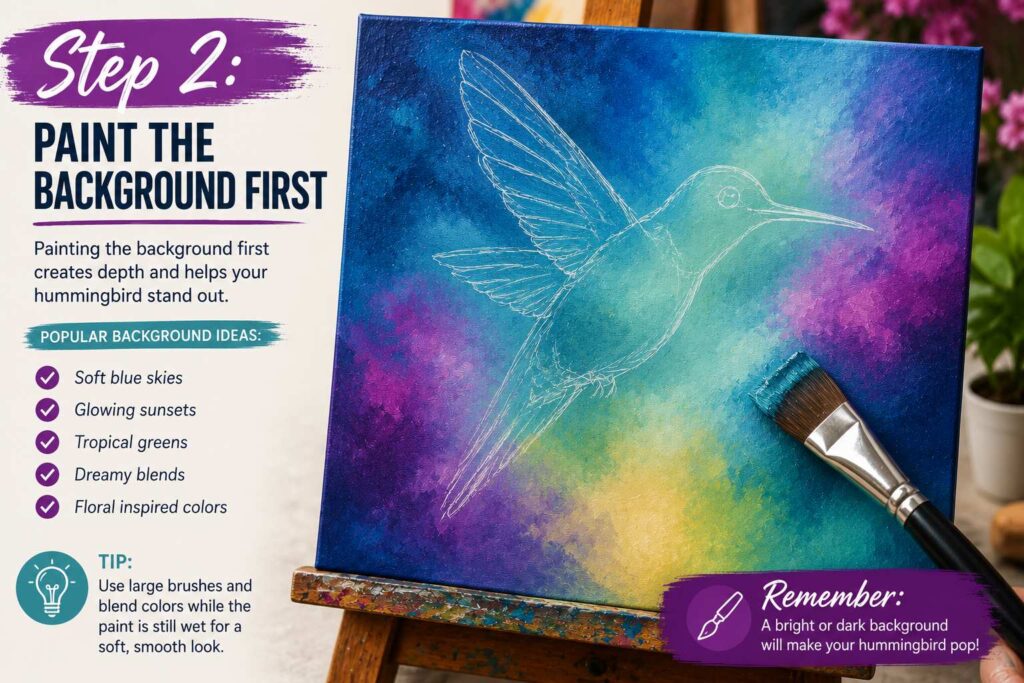
One of the biggest mistakes beginners make is painting the bird first.
Instead, paint the background before the hummingbird.
This helps:
- Create depth
- Establish contrast
- Make the bird stand out
Soft blended backgrounds work beautifully for hummingbird paintings.
Popular background ideas include:
- Blue skies
- Glowing sunsets
- Tropical greens
- Soft floral colors
- Dreamy abstract blends
Using larger brushes during this stage keeps the painting loose and painterly.
Step 3: Block In the Main Colors
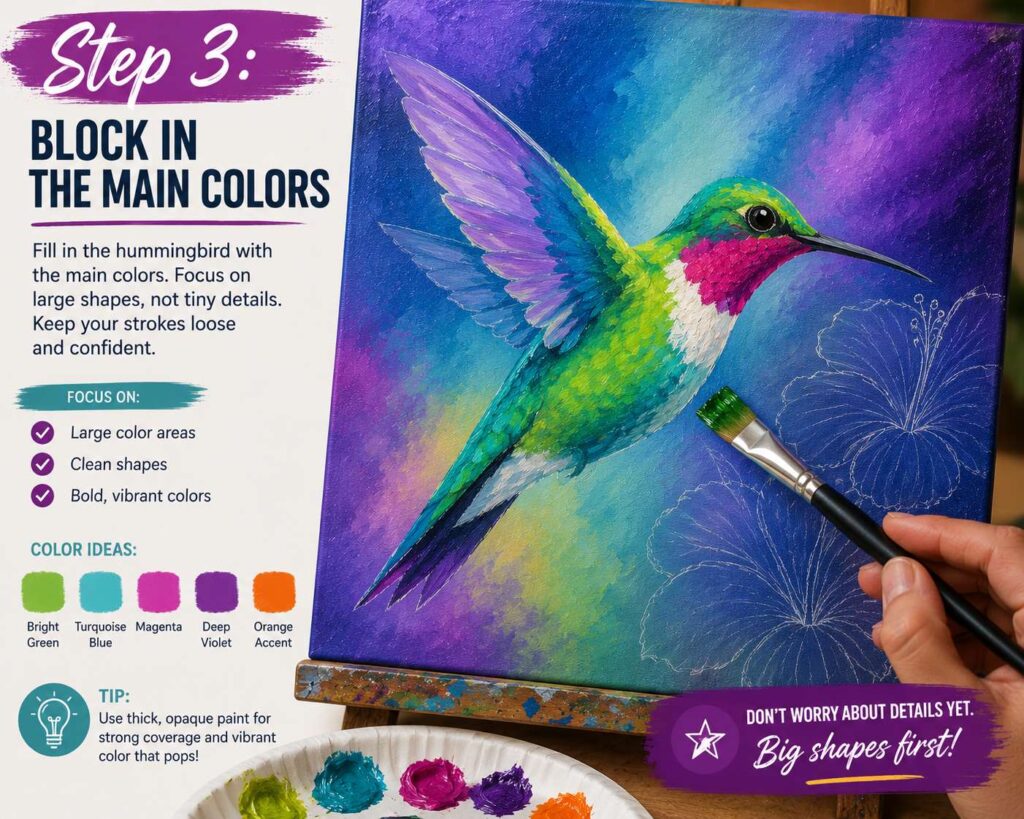
Now it is time to paint the hummingbird itself.
At this stage:
- Ignore tiny details
- Focus on large color areas
- Keep the shapes clean
Most hummingbirds look great with:
- Bright greens
- Turquoise blues
- Magenta
- Purple
- Orange highlights
Layering bold colors over a dark background creates dramatic contrast that makes hummingbirds glow.
Acrylic Painting Tip
Use slightly thicker paint during this stage for brighter coverage and stronger color intensity.
Step 4: Add Flowers and Details
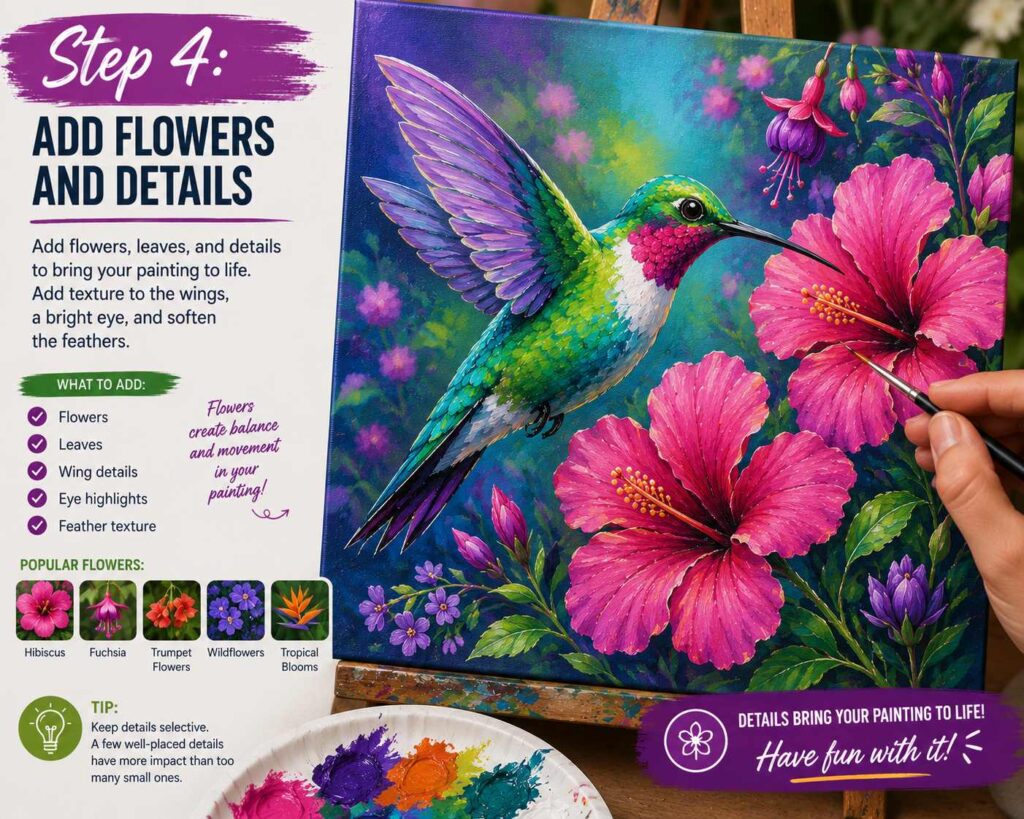
Once the hummingbird is painted, begin adding:
- Flowers
- Leaves
- Wing details
- Eye highlights
- Feather texture
This is where the artwork really comes to life.
Flowers are important because they naturally balance the composition and create movement around the bird.
Popular flowers for hummingbird paintings include:
- Hibiscus
- Trumpet flowers
- Fuchsia
- Wildflowers
- Tropical blooms
Keep details selective. Too many details can make beginner paintings feel stiff.
Step 5: Finish With Highlights and Outlines
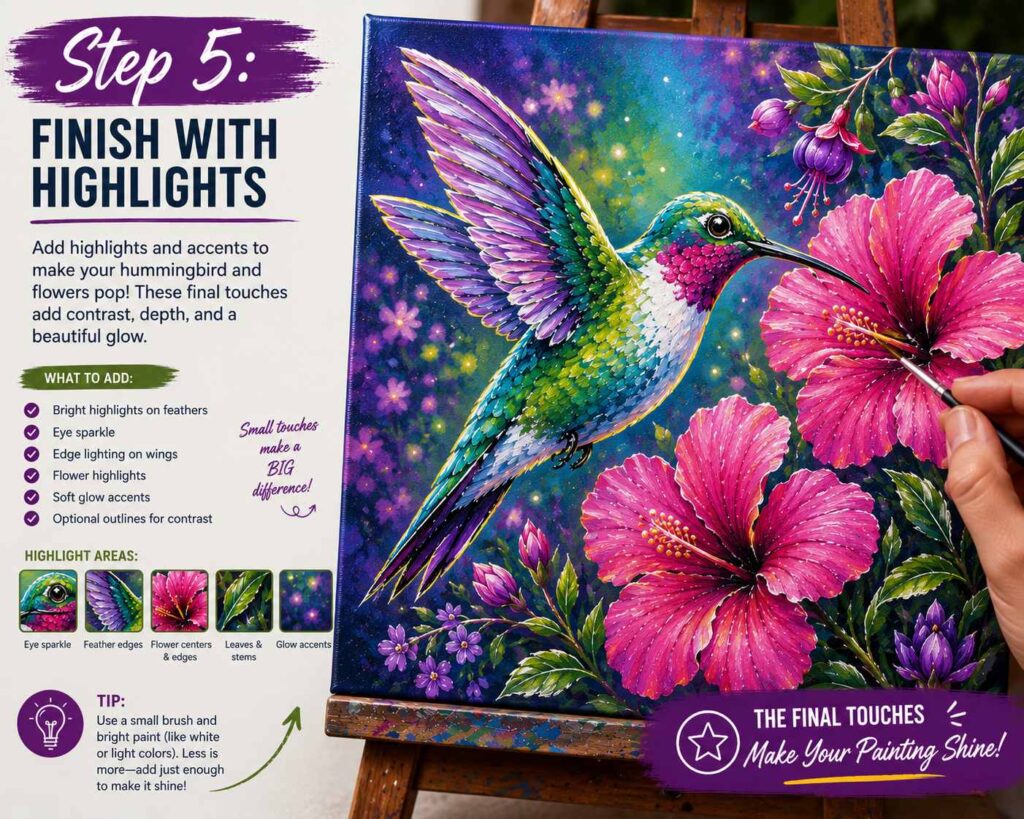
The final step is where the magic happens.
Small highlights instantly make hummingbird paintings pop.
Add:
- Bright white highlights
- Edge lighting
- Feather accents
- Soft glow effects
Some artists also like using thin dark outlines to create a stained-glass or decorative style.
This final stage increases:
- Contrast
- Depth
- Color vibrancy
- Overall visual impact
Take your time here. Small finishing touches can completely transform the painting.
Best Colors for Hummingbird Paintings
If you are new to acrylic painting, these colors work beautifully for hummingbirds:
- Phthalo Blue
- Titanium White
- Quinacridone Magenta
- Cadmium Orange
- Hooker’s Green
- Bright Yellow Green
- Deep Violet
- Mars Black
Using a dark background behind bright colors helps hummingbirds appear more vibrant and luminous.
Common Beginner Mistakes to Avoid
Making the Bird Too Small
A larger hummingbird is easier to paint and allows more room for details.
Overworking the Wings
Loose wing strokes often look more realistic than heavily detailed wings.
Using Too Many Colors
Limit your palette to avoid muddy mixtures.
Adding Too Much Detail Too Early
Always work from large shapes to small details.
Why the 5-Step System Works
This system works because it removes overwhelm.
Instead of trying to paint everything at once, you focus on one manageable stage at a time.
That creates:
- Better confidence
- Cleaner paintings
- Faster improvement
- More enjoyable painting sessions
Even complete beginners can create beautiful hummingbird artwork using this method.
Related Articles
- Stained Glass Acrylic Painting Techniques
- Small Canvas Painting Ideas
- How to Paint a Stained Glass Tree (Step-by-Step for Beginners)
Final Thoughts
Painting hummingbirds does not need to feel intimidating.
By following a simple step-by-step process, beginners can create colorful acrylic paintings that feel exciting, expressive, and rewarding.
The key is keeping things simple:
- Sketch
- Background
- Main colors
- Details
- Highlights
That is it.
With practice, your hummingbirds will become more vibrant, more dynamic, and more confident with every painting.
If you enjoy beginner acrylic painting tutorials, hummingbirds are one of the best subjects to continue practicing because they allow endless creativity with color, flowers, and composition.
This post contains affiliate links.