

This post contains affiliate links.
There’s something magical about stained glass art.
The glowing colors, bold black outlines, and flowing shapes create artwork that feels vibrant, luminous, and alive. The good news is you don’t need real glass or expensive tools to achieve this look. With a few simple acrylic painting techniques, you can bring the beauty of stained glass into your own paintings on canvas.
This painting style is beginner-friendly, relaxing, and incredibly fun to experiment with. Whether you want to paint birds, flowers, abstract designs, koi fish, or colorful landscapes, faux stained glass techniques can instantly make your acrylic artwork more eye-catching.
In this guide, you’ll learn how to create stained glass-inspired acrylic paintings step-by-step.
What Makes Stained Glass Art So Beautiful?
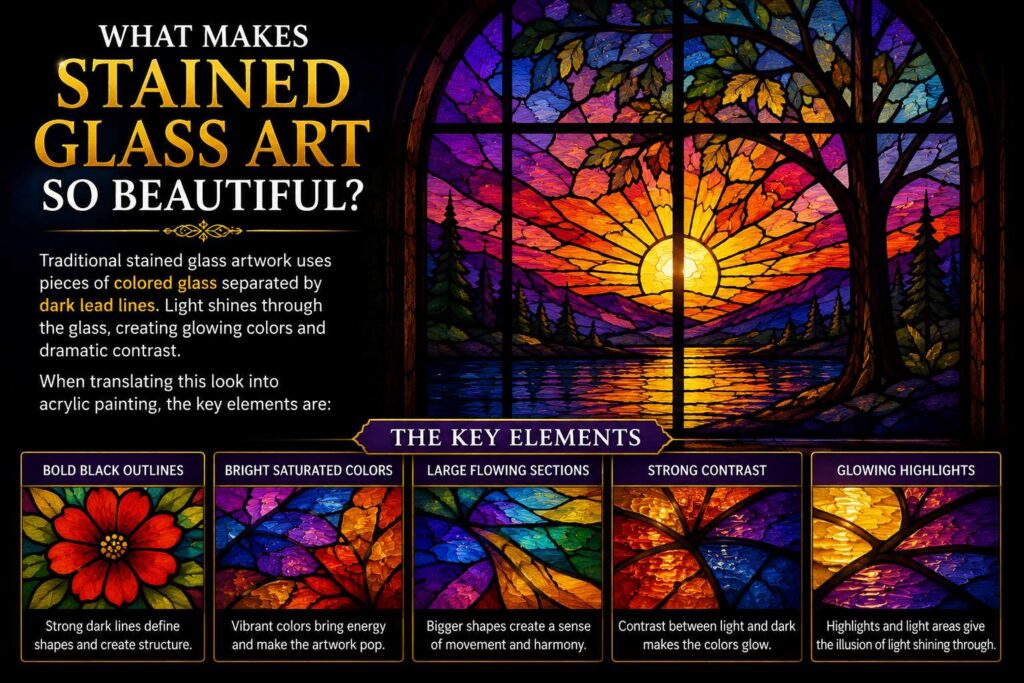
Traditional stained glass artwork uses pieces of colored glass separated by dark lead lines. Light shines through the glass, creating glowing colors and dramatic contrast.
When translating this look into acrylic painting, the key elements are:
- Bold black outlines
- Bright saturated colors
- Large flowing sections
- Strong contrast
- Glowing highlights
Together, these techniques create the illusion of stained glass on canvas.
Why Artists Love Faux Stained Glass Painting
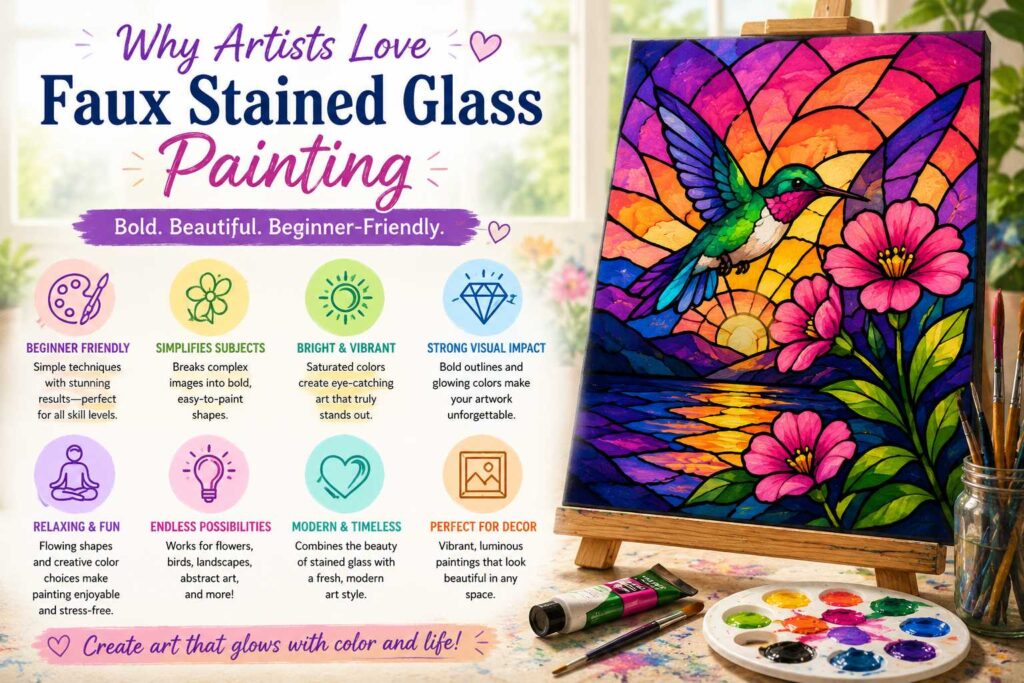
This style has become increasingly popular because:
- It works well for beginners
- It simplifies complicated subjects
- Bright colors look amazing
- Paintings feel modern and bold
- It creates strong visual impact
- It works on both black and white canvas
Best of all, you don’t need realistic drawing skills to create beautiful results.
Simple shapes often look better than overly detailed paintings in this style.
Supplies You’ll Need
You only need a few basic supplies to get started.
Canvas
You can use:
- White canvas
- Black canvas for extra glow effects
Acrylic Paint
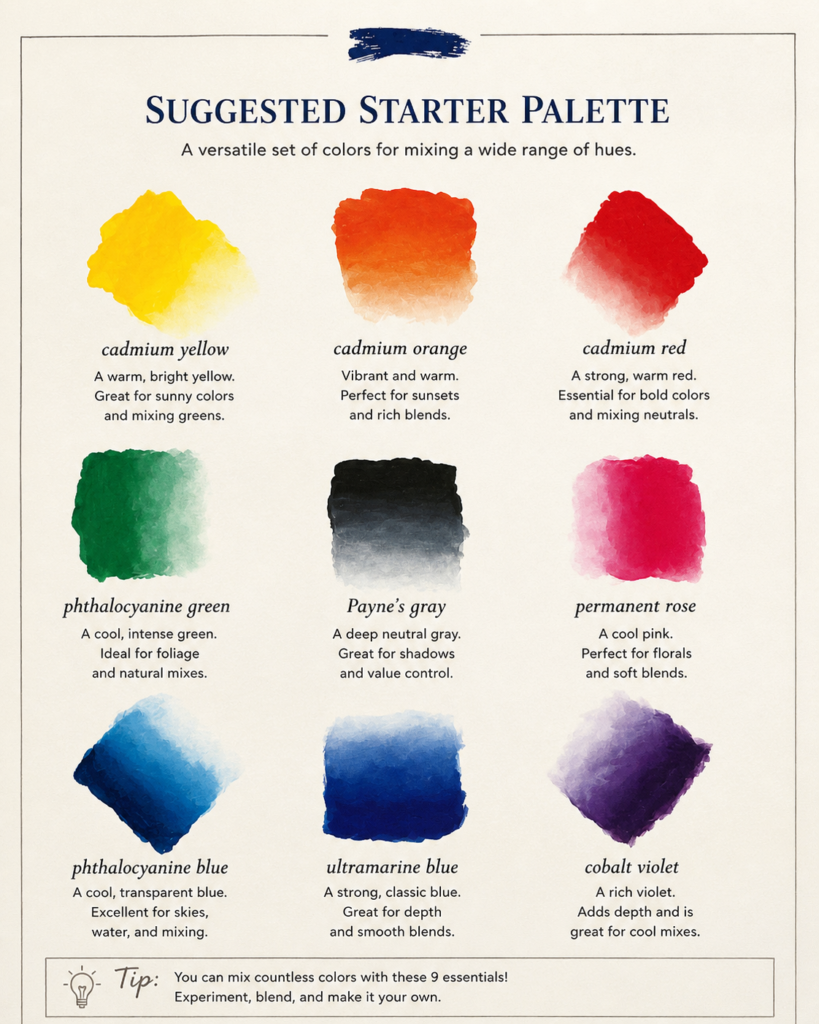
Bright colors work best:
- Titanium White
- Mars Black
- Phthalo Blue
- Primary Yellow
- Quinacridone Magenta
- Cadmium Orange
- Hooker’s Green
Brushes
Helpful brushes include:
- Flat brush
- Round brush
- Small liner brush
Other Supplies
- Paint palette
- Water container
- Paper towels
- White chalk pencil
- Paint marker (optional)
Step 1: Simplify Your Subject
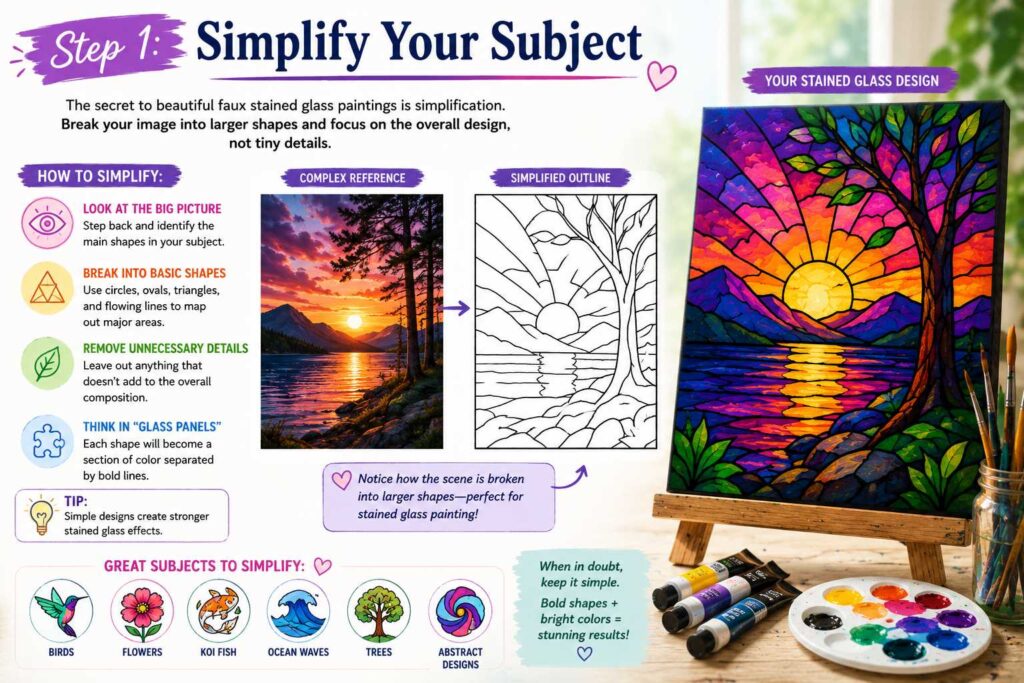
One of the biggest secrets to faux stained glass painting is simplification.
Instead of painting tiny realistic details:
- Break the image into larger sections
- Focus on major shapes
- Think in “glass panels”
This works especially well for:
- Birds
- Flowers
- Butterflies
- Trees
- Koi fish
- Ocean waves
- Abstract designs
If you’re using a reference photo, trace only the major lines and remove unnecessary details.
Simple designs create stronger stained glass effects.
Step 2: Create Bold Black Outlines
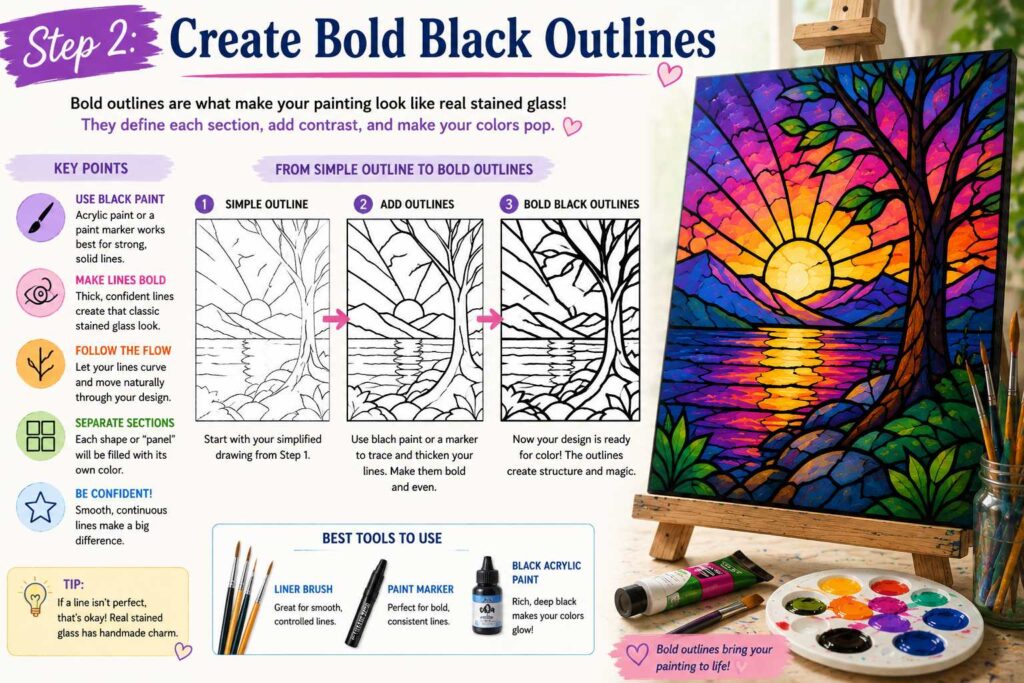
The black outlines are what truly create the stained glass illusion.
Use:
- Black acrylic paint
- Paint marker
- Or a liner brush
Your outlines should:
- Be thick and confident
- Separate color sections
- Flow naturally through the design
Avoid thin shaky lines.
Bold outlines make colors stand out and help organize the painting visually.
This stage is where your artwork starts transforming into stained glass-inspired art.
Step 3: Fill Each Section With Bright Color
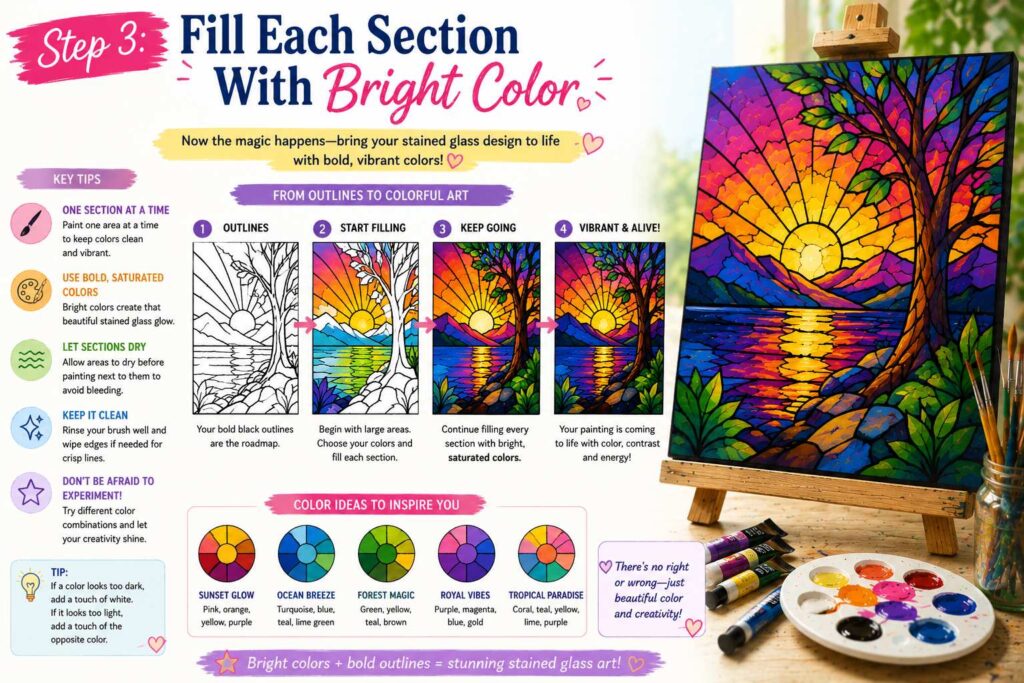
Now the fun begins.
Paint each section using bold acrylic colors.
Tips for better results:
- Paint one section at a time
- Use saturated colors
- Keep neighboring colors clean
- Allow sections to dry before painting beside them
The brighter the colors, the stronger the stained glass effect becomes.
Try combining:
- Bright blues
- Rich purples
- Deep teals
- Hot pinks
- Vivid oranges
- Lime greens
Strong color contrast creates energy and movement.
Step 4: Add Glow and Highlights
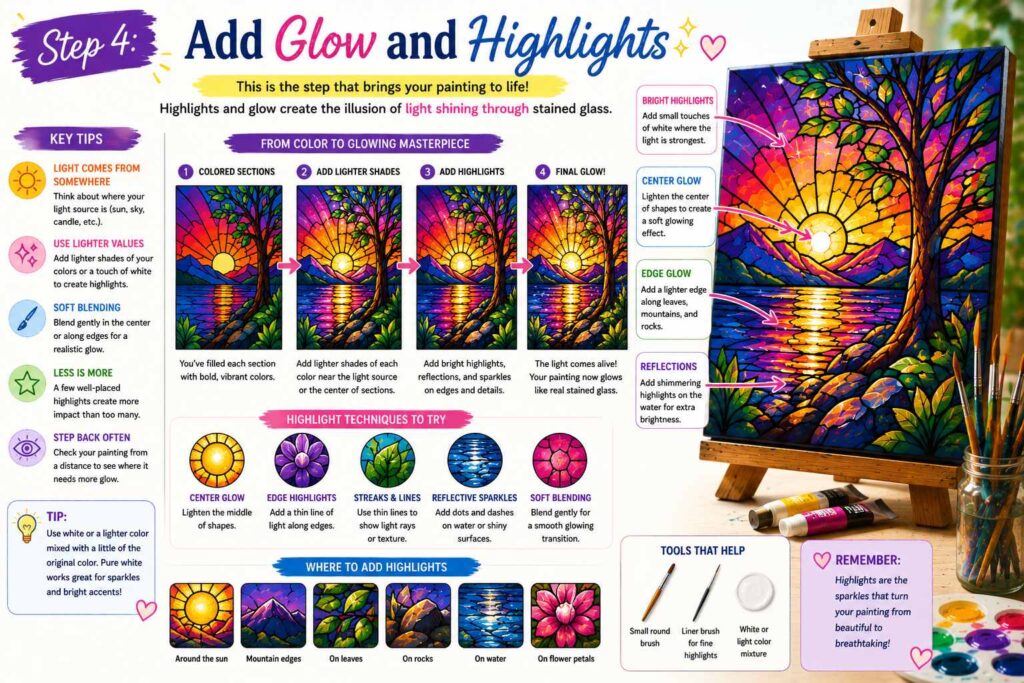
This is the step that makes your painting look luminous.
Use lighter colors to create the illusion of light shining through glass.
You can:
- Add white highlights
- Blend lighter centers
- Add glowing edges
- Use soft streaks or curves
A few highlights go a long way.
Too many highlights can overpower the design, so keep them controlled and intentional.
Step 5: Use Contrast to Make Colors Pop
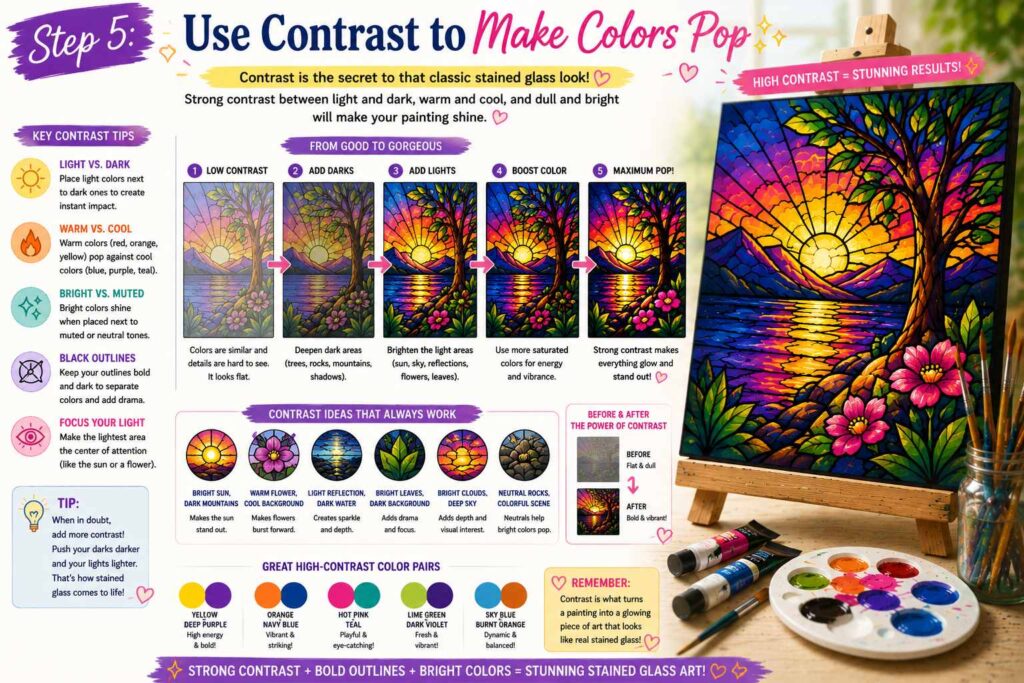
Contrast is one of the most important parts of this style.
Dark backgrounds help bright colors glow.
Great background colors include:
- Deep navy blue
- Black
- Dark teal
- Purple
- Midnight blue gradients
The goal is to make your subject stand out dramatically from the background.
This creates the rich glowing appearance stained glass is known for.
Common Mistakes to Avoid
Making Sections Too Small
Large flowing shapes usually look better.
Overcomplicating the Design
Simple compositions create stronger results.
Using Weak Colors
Bold color choices are essential.
Thin Outlines
Thicker outlines improve the stained glass effect.
Overblending Paint
Too much blending can make colors muddy.
Best Subjects for Stained Glass Acrylic Painting
Some subjects naturally work beautifully with this style.
Hummingbirds
Perfect for glowing colors and flowing shapes.
Flowers
Petals create natural stained glass sections.
Koi Fish
Their movement works beautifully with curved outlines.
Trees
Branches simplify easily into decorative panels.
Ocean Waves
Excellent for abstract flowing designs.
Abstract Art
Some of the best stained glass-inspired paintings are completely abstract.
Why This Style Is Great for Beginners
Many beginners struggle with realistic painting because it can feel overwhelming.
Faux stained glass painting removes much of that pressure.
Instead of focusing on realism, you focus on:
- Shape
- Color
- Contrast
- Flow
- Bold design
This makes the process more enjoyable and less intimidating.
Even simple paintings can look professional and dramatic using these techniques.
Final Thoughts
Stained glass-inspired acrylic painting is one of the most exciting ways to create bold, glowing artwork on canvas.
With simple shapes, strong black outlines, and vibrant acrylic colors, you can transform ordinary paintings into luminous works of art that feel energetic and modern.
Whether you’re painting hummingbirds, flowers, koi fish, or abstract designs, this technique encourages creativity while staying beginner-friendly.
The secret is simple:
- Keep your shapes bold
- Use strong contrast
- Let the colors glow
That’s what brings the beauty of stained glass into acrylic painting.
Related Articles
- How to Simplify a Photo for Acrylic Painting
- How to Paint Clean Lines with Acrylic
- Stained Glass Acrylic Painting Techniques
Frequently Asked Questions
Can acrylic paint look like stained glass?
Yes. Using bold outlines, bright colors, and glowing highlights can create a stained glass appearance with acrylic paint.
Do I need drawing skills?
No. This style works best with simplified shapes and flowing sections.
Is black canvas better?
Black canvas creates stronger glow effects, but white canvas works beautifully too.
What are the best colors for stained glass painting?
Bright saturated colors like blue, magenta, orange, teal, green, and purple work especially well.
What subjects work best?
Birds, flowers, koi fish, waves, trees, and abstract designs are all excellent choices.
This post contains affiliate links.