
This post contains affiliate links.
A paint mixture that looks perfect on Tuesday can be surprisingly difficult to repeat on Saturday. A color-swatch notebook gives you a record of your own experiments, including the mixtures that disappointed you. Keep it small enough to stay beside the place where you paint.
Give Each Page One Question
Start with a question such as “How many useful greens can I mix from these two colors?” or “What happens when I lighten this blue?” A page with one purpose is easier to read later than a crowded collection of unrelated dabs.
Write the paint names and any label information you need to identify them again. If you use different brands or paint ranges, record that distinction. Names that sound similar do not guarantee an identical result.
Make a Repeatable Layout
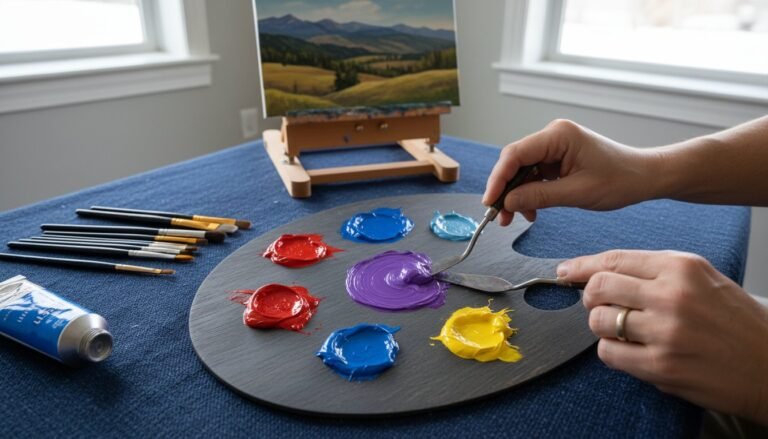
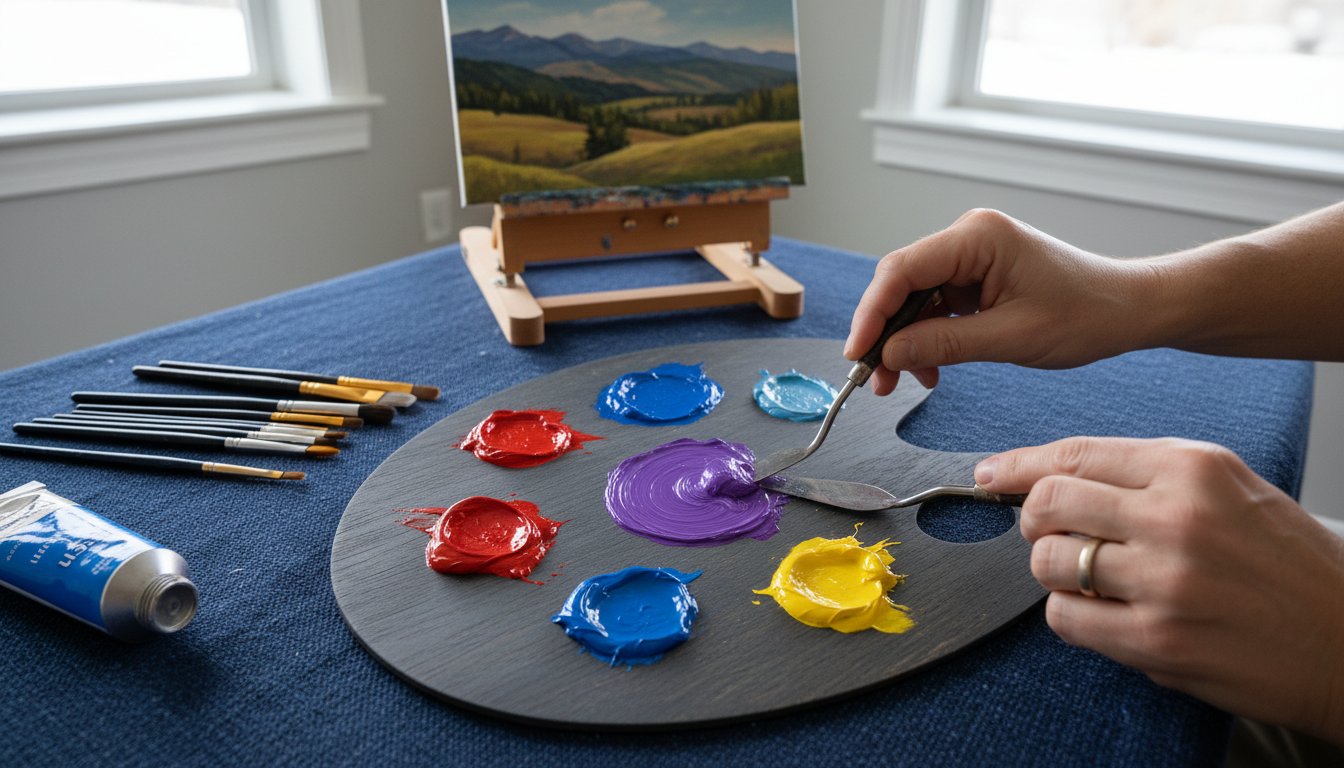
Use rows of small patches on a surface suitable for the paints you use. Begin with the unmixed colors, then make a few mixtures between them. Record rough proportions in your own terms, such as one brushful and a small touch, without pretending this is a precise laboratory recipe.
Leave enough room for notes. If you change the support or add a medium, label the change instead of treating it as the same test. Follow the product’s handling and cleanup instructions.
Look Again After the Paint Dries
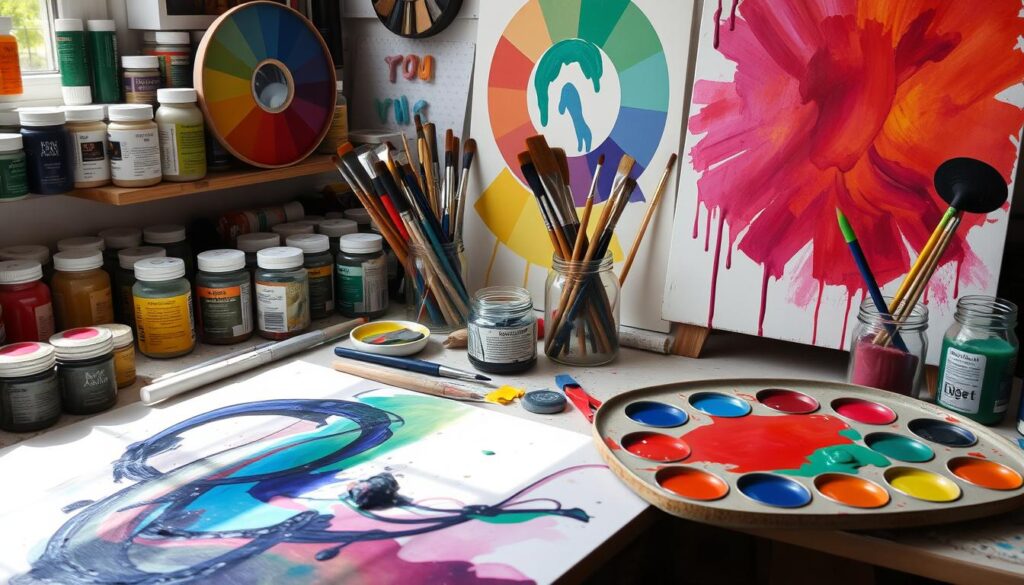
Compare the dry patch with your first impression and write what you notice. You can also view the page near a painting in progress to judge whether the mixture serves your actual purpose.
Try a simple exercise: choose three mixtures for leaves in a small still life. Label them light, middle and dark according to their role in that painting. You are building a personal vocabulary, not looking for a universal correct green.
Use the Notebook on the Next Painting
Before starting a new piece, select one or two mixtures to reuse. Add a reference to the swatch page in your painting notes.
Do not judge the notebook by how attractive it looks. A readable page that helps you remake a useful color has done its job, even when the edges are untidy. Save space for revisions as your palette and preferences change.
Keep Exploring
This post contains affiliate links.